









Every gram removed from a UAV can support longer flight time or more mission payload, provided structural reliability is maintained.
- Application
- Industrial inspection and special-purpose UAVs
- Core process
- Carbon fiber composite forming and precision finishing
The challenge
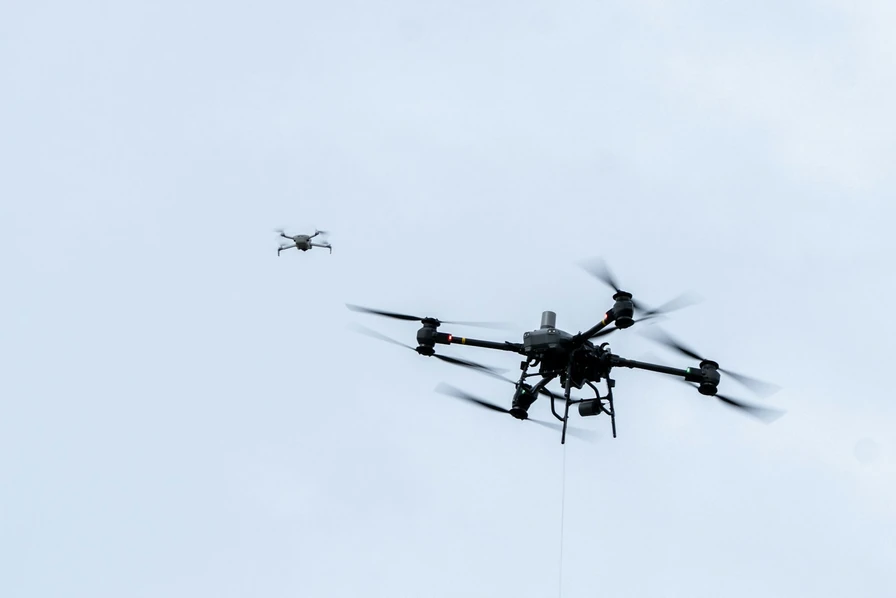
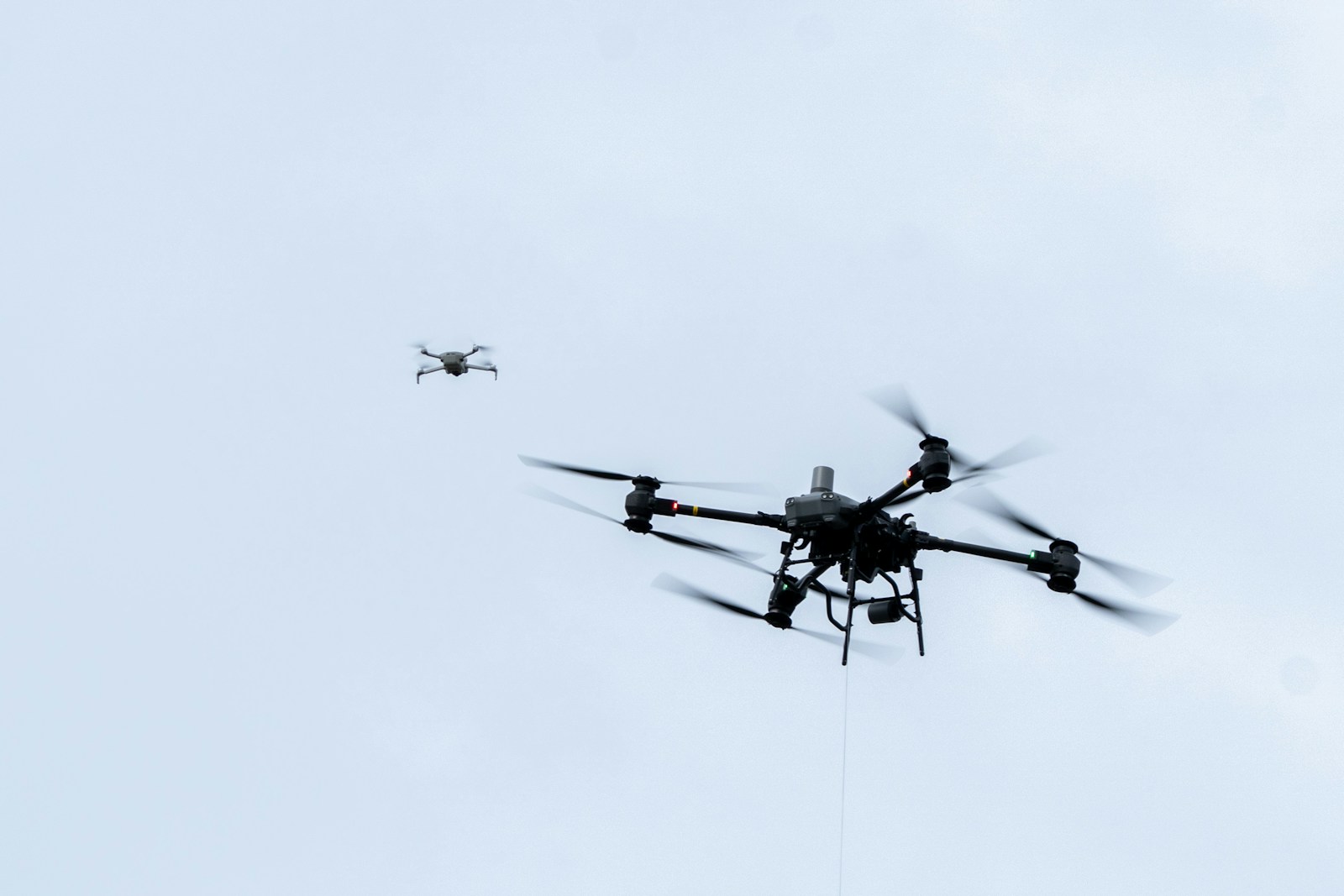
Adding lidar to a new inspection UAV increased payload and reduced endurance. Rather than keep increasing battery capacity, an industrial drone manufacturer targeted the arms and connectors for weight reduction. The task went beyond substituting carbon fiber: the parts had to withstand motor thrust, continuous vibration and takeoff and landing impacts, while inserts, hole positions and laminate layups remained consistent in production.
Our approach
Carbon fiber has no single strength value independent of its structure. Performance depends on fiber orientation, ply count, resin system and forming quality. The project therefore began with load cases rather than the exterior model. The bending, torsion and joint loads on each arm informed the role of each ply orientation, with local reinforcement at motor mounts, arm roots and openings. Unnecessary plies were avoided so weight savings were not lost.
Once the structure was defined, part size, surface requirements and planned volumes guided the choice of prepreg compression molding, vacuum bagging or autoclave processing. Tooling, ply positioning, compaction and cure parameters were then validated.
Cured parts were trimmed and drilled with dedicated tooling to reduce burrs and delamination. Where metal inserts were used, the joining method and any necessary isolation between dissimilar materials were checked. YCMinMax placed layup drawings, cutting templates, cure profiles and finishing datums under unified revision control.
Validation & delivery
Validation addressed both weight and structure. Each part's weight, thickness and key hole locations were recorded, alongside checks for wrinkles, resin-starved areas, voids and delamination. Joint regions can undergo pull-out or torque tests; complete parts are assessed in bending, torsion, vibration or fatigue according to their actual operating conditions.
If initial testing identifies insufficient local stiffness, reinforcement is adjusted around the load direction rather than simply thickening the whole part. Delivery includes the lighter component, a repeatable layup process and the validation basis needed to support higher production volumes.
Application & process






Client
Feedback